Broth, kimchi and even dishes labeled “vegetable” can contain animal-derived ingredients. Here is what vegetarian travelers should check before ordering.
Key Takeaways
- Vegetable-named dishes may still contain meat, egg, crab-flavored meat or animal-based broth.
- Kimchi can contain fish sauce, salted seafood, meat broth and other animal ingredients.
- On labels and menus, 젓 or 젓갈 indicates fermented salted seafood; 새우젓 means salted shrimp.
- Packaged-food allergen declarations are useful but do not replace checking the full ingredient list.
- Temple food can reduce the risk of hidden meat and seafood, but dairy may be permitted.
Eating vegetarian food in Korea requires more than choosing a dish that appears to contain vegetables. According to the Korea Tourism Organization, meat or fish broth and seafood-based seasonings are common enough that travelers should confirm each ingredient they want to avoid. Recipes also differ between restaurants, so a dish name alone is not a guarantee.
Why vegetable dishes may not be vegetarian
Animal-derived ingredients can enter a dish through its stock, seasoning, filling or accompanying kimchi. The Korea Tourism Organization highlights several dishes that need closer checking:
- Bibimbap: It frequently includes meat and egg. Ask about both if they are outside your diet.
- Vegetable gimbap: Despite the name, it may contain ham, egg or crab-flavored meat.
- Tofu dishes: Tofu stews and braised tofu may be seasoned with salted shrimp.
- Kimchi: Common recipes can contain salted seafood, fish sauce or meat broth. Some regional versions may also include abalone, cutlass fish or pork.
These are warnings rather than fixed recipes. Individual restaurants may prepare the same dish differently, making direct confirmation important.
Do not overlook broth and fermented seafood
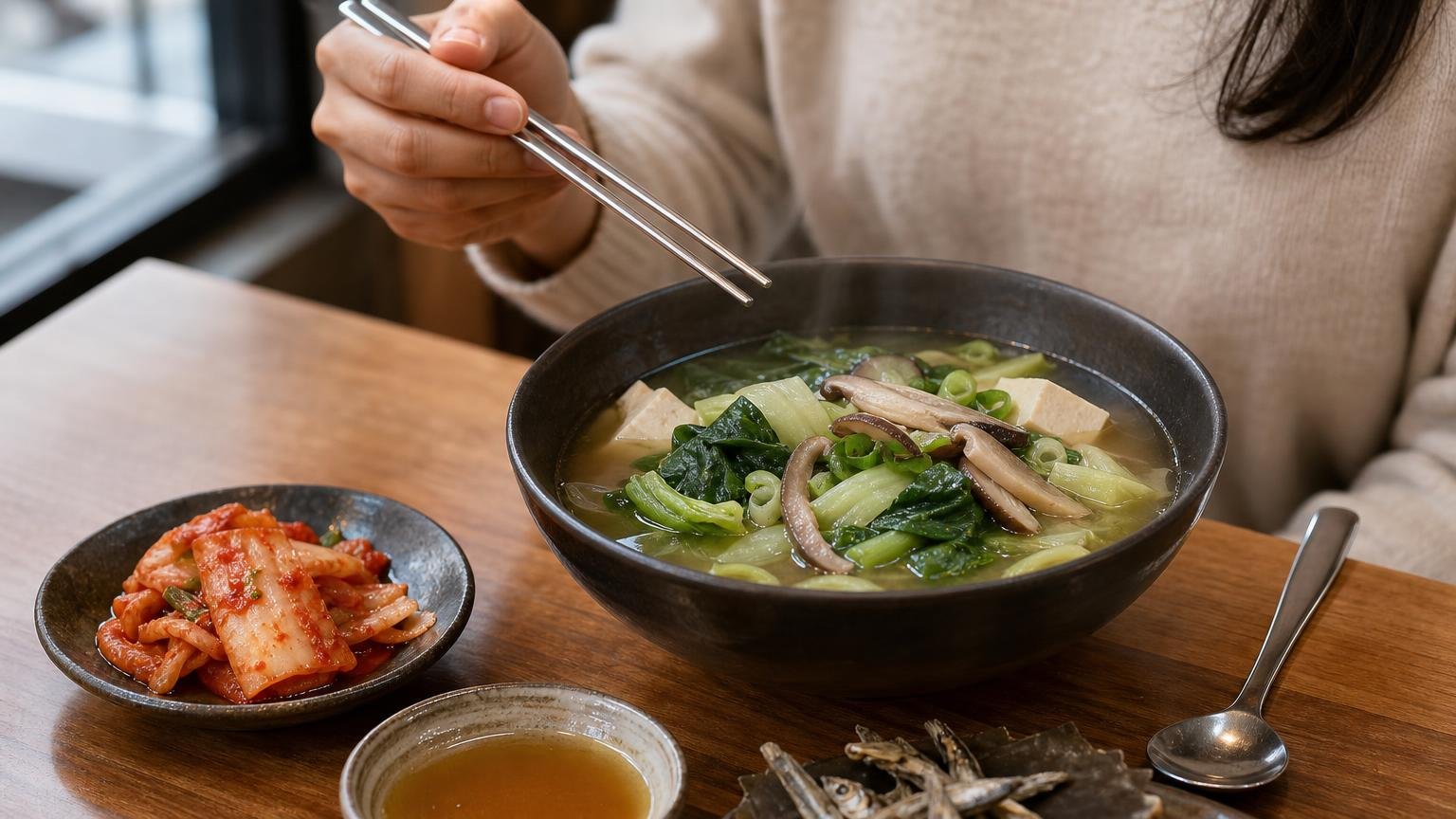
A bowl filled with tofu or vegetables may still use a meat- or fish-based broth. When ordering, identify every animal-derived ingredient you exclude rather than relying only on a general description of the dish.
One useful term to recognize is 젓 (jeot). The National Institute of Korean Language defines it as seafood—such as shrimp, anchovies, clams or fish roe—that has been salted and fermented. 젓갈 (jeotgal) likewise indicates fermented salted seafood, while 새우젓 (saeujeot) refers specifically to salted shrimp.
These ingredients may appear in kimchi, sauces and vegetable side dishes. Their absence from a dish’s visible toppings does not establish that the recipe is vegetarian.
How to check packaged-food labels
Korean packaged foods are required to provide ingredient information. They also carry separate allergen labeling for specified ingredients, including eggs, milk, mackerel, crab, shrimp, pork, chicken, beef, squid and clams. For this purpose, the clam category includes oysters, abalone and mussels.
Ingredients produced by extracting or otherwise processing a listed allergen must also be declared. A package may additionally carry a warning about possible allergen mixture when products share manufacturing processes.
However, the allergen panel is not a complete vegetarian checklist. It does not highlight every possible fish or animal derivative. Check the full ingredient list as well, recognizing that it may be available only in Korean. Restaurant meals generally do not provide the same packaged-food ingredient information.
When temple food can help
Food made according to Korean Buddhist temple-food principles offers a practical way to avoid hidden meat, fish broth and salted seafood. The official Korean Temple Food site states that this cuisine excludes animal products except dairy. Plant-based ingredients such as mushroom powder, kelp powder, perilla seed powder and uncooked bean powder are used to flavor stocks, kimchi and vegetable dishes.
Temple cuisine also excludes five pungent vegetables: onions, garlic, chives, green onions and leeks. This is a feature of the cuisine rather than evidence that an ordinary restaurant dish without those vegetables follows temple-food standards.
Two qualifications matter. First, temple food is not necessarily vegan because dairy is permitted. Second, a restaurant described as “temple-style” should not automatically be treated as following formal Korean Buddhist temple-food practices. Confirm how the restaurant actually prepares its dishes.
A practical ordering and shopping checklist
- Name every exclusion: Do not assume that “vegetarian” communicates whether you avoid meat, seafood, broth, fish sauce, salted seafood, eggs or dairy.
- Check the stock: Ask whether a tofu or vegetable dish is prepared with meat or fish broth.
- Check the kimchi: Confirm whether it contains fish sauce, salted seafood, meat broth or another animal ingredient.
- Question vegetable labels: Vegetable gimbap and other vegetable-named dishes may still contain ham, egg or crab-flavored meat.
- Read two parts of a package: Use the allergen declaration as a first screen, then examine the complete ingredient list.
- Recognize seafood terms: Treat 젓, 젓갈 and 새우젓 as signs of animal-derived fermented seafood.
- Consider verified options: The Korea Tourism Organization recommends temple food and products with certified-vegan labels as safer choices, while still advising travelers to confirm current details.
What This Means
For vegetarian travelers in Korea, the central issue is preparation rather than appearance. A plate of vegetables, tofu or rice can include animal ingredients through broth, fermented seafood or fillings. The most reliable approach is to state every excluded ingredient, ask about the recipe at the individual restaurant and inspect the complete label on packaged foods.
The Korea Tourism Organization’s guidance was last updated in October 2023 and warns that information may change. Check the linked official page for current guidance. Its Korea Travel Hotline is listed as +82-2-1330, with support in Korean, English, Japanese, Chinese, Russian, Vietnamese, Thai and Malay.
